
98.7% HPLC

Envío el mismo día
Analizado por terceros — COA por lote
Atención los 7 días
Pedido
Enviado
Entregado
Longevidad
NAD+
★★★★★ 4.9 · Agotado
Analizado por terceros
Pureza (HPLC)≥99.57%
ToxinasNo detectadas
LaboratorioFreedom Diagnostics
LoteNAD260428-N14
$ 1,350.00$ 1,400.00
-4%
Áreas de investigación
Complementos
¿Te avisamos cuando esté disponible?
Solo para este aviso. Sin newsletters.
Listo. Te escribimos.
COA verificable
Envío exprés
Testado por terceros
Descripción +
Coenzima central del metabolismo energético — combustible de sirtuinas y mitocondrias.
Pureza ≥98.7% HPLCFormato Polvo liofilizadoVial 3 mlSolo investigación
Resumen
El NAD+ (dinucleótido de nicotinamida y adenina) es una coenzima fundamental presente en todas las células, con dos funciones críticas: como transportador redox en el metabolismo energético (acepta y dona electrones en la fosforilación oxidativa) y como sustrato de enzimas como las sirtuinas (SIRT1–7), las PARP y las ectoenzimas CD38/CD157. Sus niveles caen con la edad (hasta 50% entre la juventud y la mediana edad) y se asocian a disfunción mitocondrial, menor reparación de ADN y disfunción metabólica. La investigación de su suplementación se centra en activar sirtuinas (sobre todo SIRT1 y SIRT3), promover biogénesis mitocondrial, mejorar la reparación de ADN, modular ritmos circadianos y extender el healthspan en modelos.
Aplicaciones de investigación
- Activación de sirtuinas (SIRT1–7) y vías de longevidad
- Biogénesis mitocondrial y fosforilación oxidativa
- Reparación de ADN mediada por PARP
- Senescencia celular, envejecimiento y declive de NAD+
- Regulación del ritmo circadiano y homeostasis metabólica
- Actividad NADasa de CD38 y depleción de NAD+ por edad
Referencia de protocolo (investigación)
Niveles de dosis que referencia la calculadora de péptidos de MVLabs, solo para referencia de investigación:
Dosis inicial50 mg
Mantenimiento50–100 mg
FrecuenciaDiario o según protocolo
NAD+ estudiado en vías mitocondriales/energéticas. En investigación se administra lento por vía subcutánea por el rubor.
Solo referencia de investigación — no es guía de dosificación para uso humano. Usa la calculadora para otros viales o volúmenes.
Presentaciones y dosis: el vial varía por producto. Revisa la guía de reconstitución y usa la calculadora para convertir tu dosis a unidades exactas.
Abrir la calculadora →Manejo y almacenamiento
Se suministra como polvo liofilizado. Conservar a 2–8 °C al recibir; proteger de calor, luz y humedad, y evitar la agitación excesiva. Si se requiere reconstitución para trabajo de laboratorio, usar técnica estéril — agua bacteriostática, o ácido acético al 0.6% para péptidos de baja solubilidad. Los protocolos varían según la aplicación.
Productos relacionados
Solo para investigación. Material de grado investigación y alta pureza (≥98.7% HPLC) suministrado estrictamente para fines de laboratorio y analíticos. No apto para consumo humano o animal; no es un medicamento ni suplemento; no aprobado por la FDA, EMA u otras agencias. Debe manejarse únicamente por profesionales calificados en instalaciones adecuadas, conforme a la ley aplicable. El certificado de análisis puede estar disponible a solicitud.
Especificaciones +
| Pureza (HPLC) | ≥ 99.57% |
| Forma | Liofilizado |
| Categoría | Longevidad |
| Almacenamiento | -20 °C, sin luz |
| SKU | NJ100 |
Reconstitución +
Reconstituye con agua bacteriostática y usa nuestra calculadora de reconstitución para convertir tu dosis objetivo a unidades de jeringa.
Certificado (COA) +
El certificado de análisis de este lote lo emite y aloja Freedom Diagnostics, un laboratorio independiente. El enlace directo al PDF está arriba, en la tarjeta de análisis.
Herramienta
Calculadora de reconstitución y dosis
Convierte tu dosis objetivo a unidades de jeringa para este compuesto, en su página dedicada.
También te puede servir
Completa tu protocolo
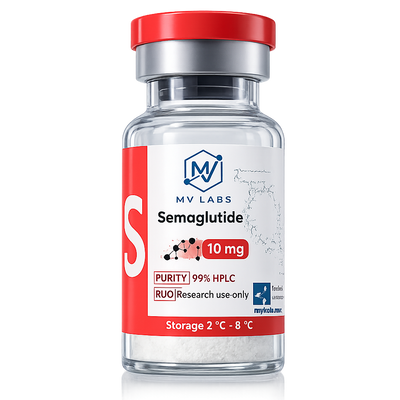
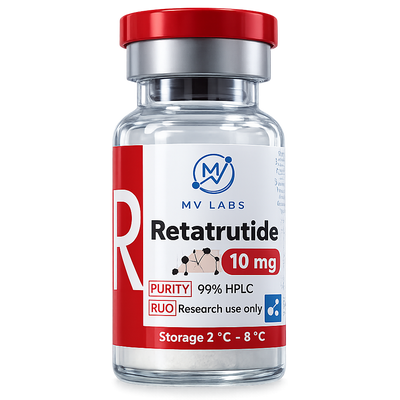
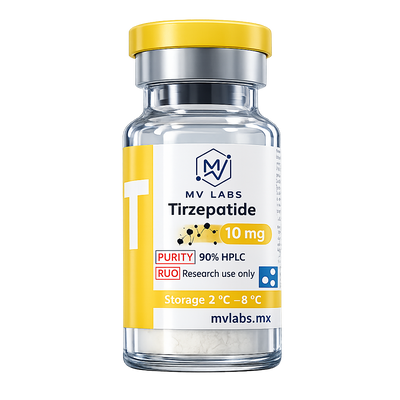
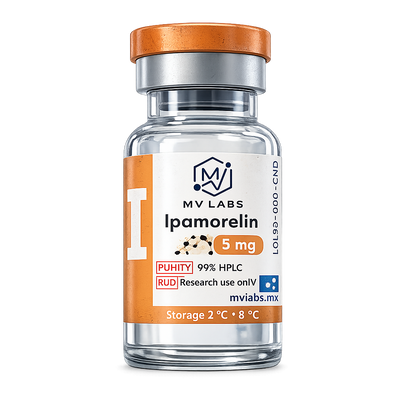
Academy
Guías y artículos

BPC-157 y TB-500 en México — Guía 2026

Cómo Reconstituir un Péptido: Guía Interactiva

CJC-1295 e Ipamorelin en México — Guía 2026

IGF-1 LR3 en México: Guía Completa 2026
Semaglutide: Complete Research Guide
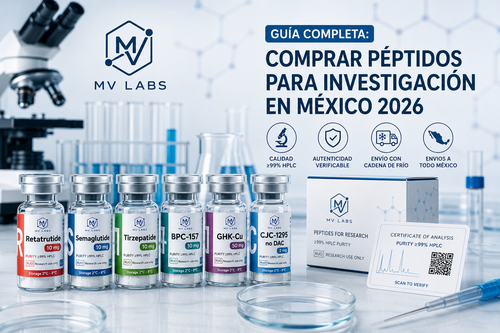
Guía Completa: Comprar Péptidos para Investigación en México 2026
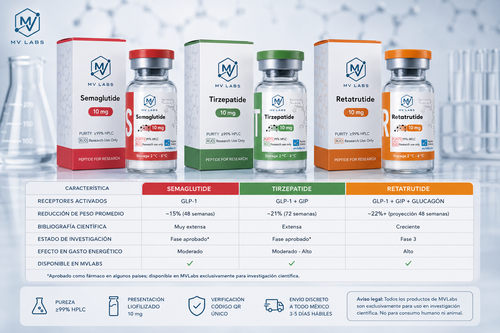
Retatrutide vs Semaglutide vs Tirzepatide: Comparativa para Investigación Metabólica
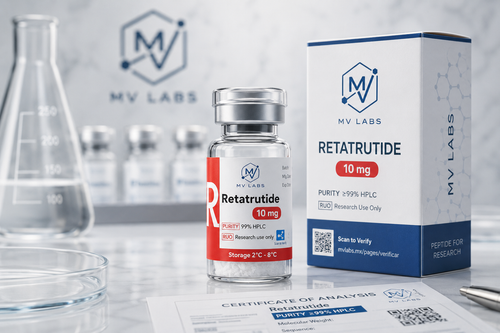
Qué es Retatrutide: Guía Completa del Péptido Triple Agonista
Herramientas MVLabs
Manéjalo bien
Verifica tu lote
Introduce el código del vial y lee el COA de ese lote exacto.
Verificar →Calculadora de reconstitución
Entra vial, solvente y dosis objetivo; salen las unidades en la jeringa.
Abrir calculadora → NuevoRegístralo con Protocol
Anota dosis, tiempos y observaciones. Se instala como app y funciona sin conexión.
Abrir Protocol →⚠ Solo para investigación (RUO). Compuesto liofilizado de grado investigación para uso in vitro únicamente. No aprobado para uso humano o veterinario. Venta a investigadores calificados. +18.