
98.7% HPLC

BPC-157
★★★★★ 4.9 · In stock
$ 800.00
Verifiable COA
Express shipping
Third-party tested
Description +
Body Protection Compound — a stable gastric pentadecapeptide studied for angiogenesis and tendon, ligament and gut repair.
Purity ≥98.7% HPLCFormat Lyophilized powderVial 3 mlResearch use only
Overview
BPC-157 (Body Protection Compound-157) is a synthetic pentadecapeptide — a stable 15-amino-acid sequence derived from a protective protein identified in gastric juice. It is among the most extensively studied peptides in tissue-repair research, examined for its influence on angiogenesis, fibroblast activity and the nitric-oxide system.
In preclinical models, BPC-157 has been described promoting new blood-vessel formation through VEGFR2–Akt–eNOS signaling and up-regulating growth-factor pathways involved in the healing of tendon, ligament, muscle and gastrointestinal tissue. Supplied as research-grade material for laboratory use only.
Research applications
- Tendon, ligament and muscle repair research models
- Angiogenesis and VEGFR2–Akt–eNOS signaling
- Fibroblast migration, survival and collagen-related research
- Gastrointestinal-protection and gut-healing models
- Growth-hormone-receptor expression in tendon fibroblasts
- Nitric-oxide system and neuroprotection research
Research protocol reference
Dose levels referenced by the MVLabs peptide calculator, shown for research reference only:
Starting dose250 mcg
Maintenance250–500 mcg
Frequency1–2×/day
Pentadecapeptide studied in tissue-repair models. Research references often use ~250–500 mcg/day, sometimes split into two doses; protocols vary by study.
Research reference only — not dosing guidance for human use. Use the calculator for other vials or volumes.
Presentations & dosing: vial size varies by product. See the reconstitution guide in the Academy and use the calculator to convert your dose into exact units.
Open the calculator →Handling & storage
Supplied as a lyophilized powder. Store at 2–8 °C on receipt; protect from heat, light and moisture, and avoid excessive agitation. If reconstitution is required for laboratory work, use sterile technique — bacteriostatic water, or 0.6% acetic acid for low-solubility peptides. Protocols vary by research application.
References
- Chang CH, Tsai WC, Lin MS, Hsu YH, Pang JH. The promoting effect of pentadecapeptide BPC 157 on tendon healing involves tendon outgrowth, cell survival, and cell migration. J Appl Physiol 2011. physiology.org
- Chang CH, Tsai WC, Hsu YH, Pang JH. Pentadecapeptide BPC 157 enhances the growth hormone receptor expression in tendon fibroblasts. Molecules 2014. doi.org
- Hsieh MJ, et al. Therapeutic potential of pro-angiogenic BPC157 is associated with VEGFR2 activation and up-regulation. J Mol Med (Berl) 2017. doi.org
Research use only. Research-grade, high-purity material (≥98.7% HPLC) supplied strictly for laboratory and analytical purposes. Not for human or animal consumption; not a drug or dietary supplement; not approved by the FDA, EMA or other agencies. To be handled only by qualified professionals in appropriate facilities, under all applicable laws. A certificate of analysis may be available on request.
Specifications +
| Purity (HPLC) | ≥ 98.7% |
| Form | Lyophilized |
| Storage | -20 °C, no light |
| SKU | 8213004189811 |
Reconstitution +
Reconstitute with bacteriostatic water and use our reconstitution calculator to convert your target dose into syringe units.
Certificate (COA) +
Each batch includes a verifiable certificate of analysis at /verify using the product code.
Tool
Reconstitution & dosing calculator
Convert your target dose into syringe units for this compound, on its dedicated page.
You may also need
Complete your protocol
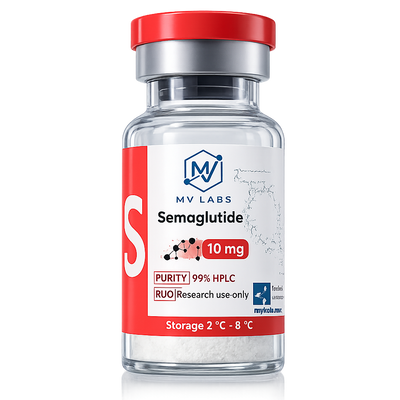
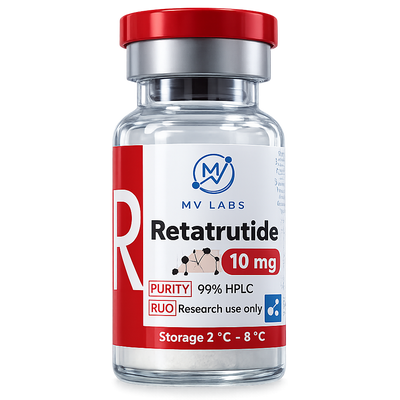
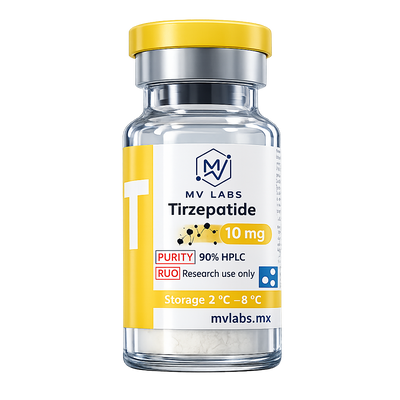
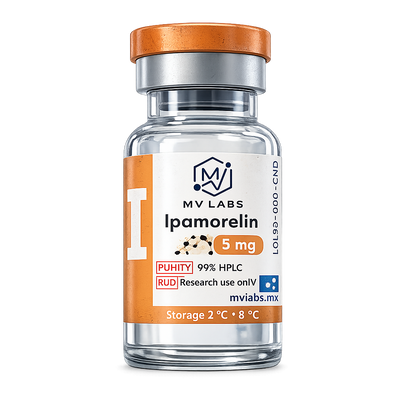
Academy
Guides & articles
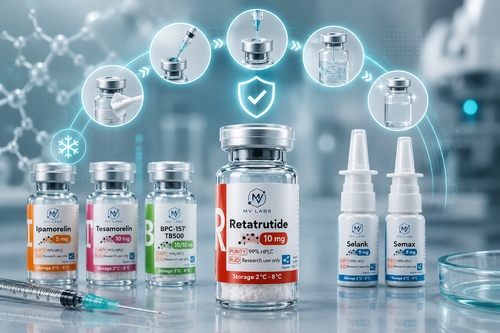
How to Reconstitute a Peptide: A Simple Step-by-Step Guide
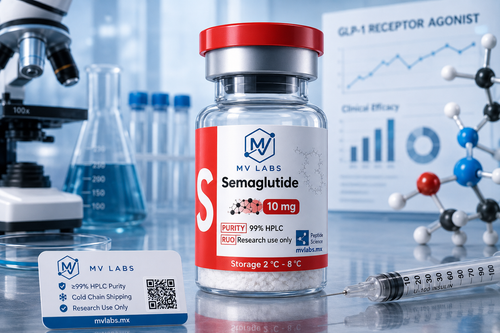
Semaglutide: Complete Research Guide
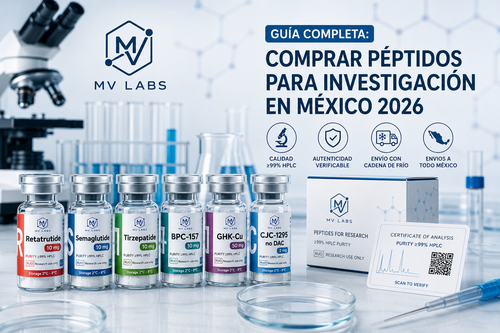
Guía Completa: Comprar Péptidos para Investigación en México 2026
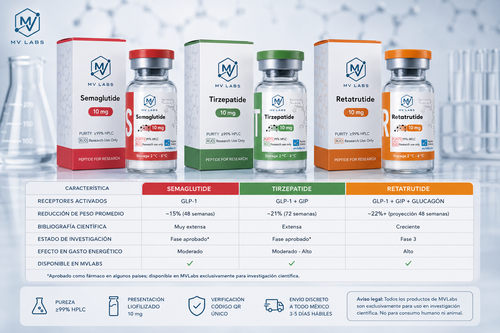
Retatrutide vs Semaglutide vs Tirzepatide: Comparativa para Investigación Metabólica
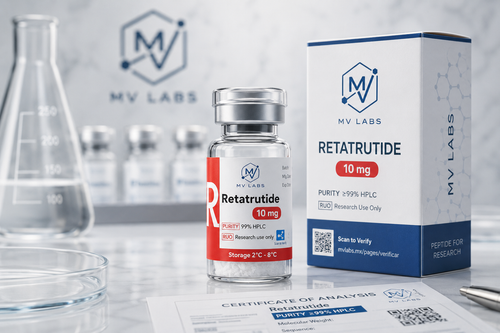
Qué es Retatrutide: Guía Completa del Péptido Triple Agonista
⚠ Solo para investigación (RUO). Compuesto liofilizado de grado investigación para uso in vitro únicamente. No aprobado para uso humano o veterinario. Venta a investigadores calificados. +18.