
98.7% HPLC
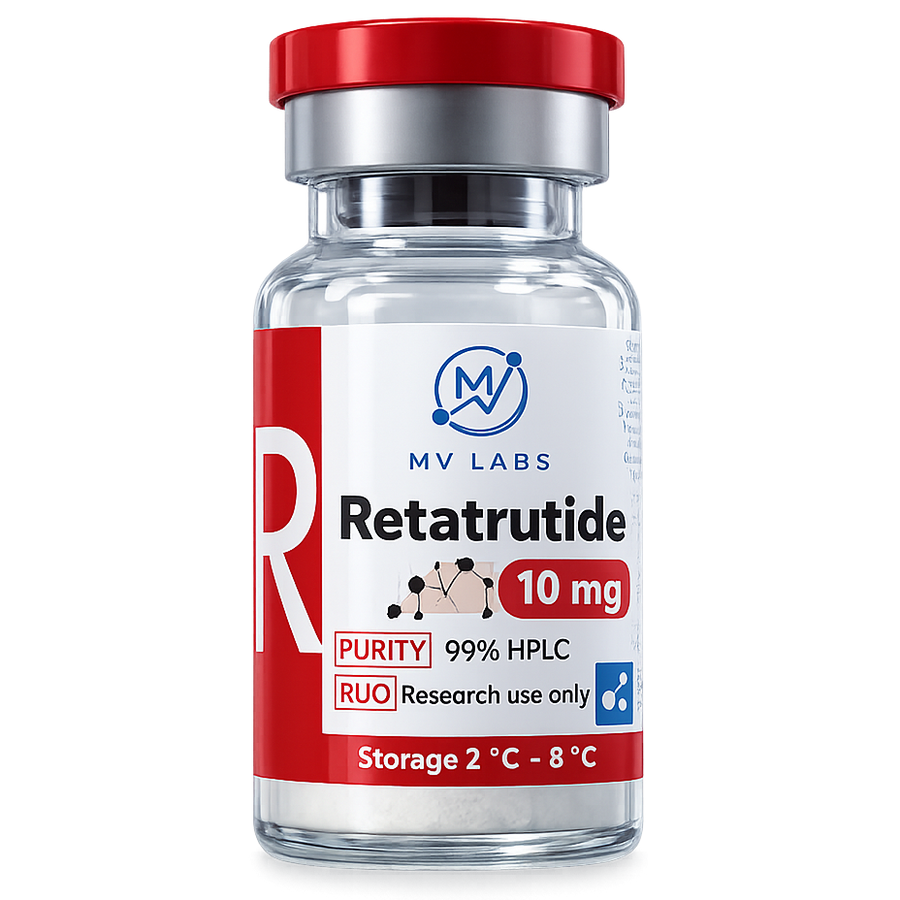
Péptido
Retatrutide
★★★★★ 4.9 · In stock
$ 2,800.00$ 3,350.00
-16%
Presentation
5mg $ 1,500.00
10mg $ 2,800.00
30mg $ 6,900.00
Verifiable COA
Express shipping
Third-party tested
Description +
Purity ≥98.7% HPLC Format Lyophilized powder 10 mg / vial SKU RT10 Research use only
Studied across metabolic and energy-balance pathways.
Overview
Retatrutide is an investigational peptide studied in metabolic research. It is designed as a triple receptor agonist, interacting simultaneously with three key pathways of metabolic regulation: the GLP-1 receptor (glucagon-like peptide-1), the GIP receptor (glucose-dependent insulinotropic polypeptide) and the glucagon receptor. Because it engages all three at once, it is described in the literature as a "triple agonist." It remains under clinical investigation and is not approved as a pharmaceutical product.
Research applications
- Metabolic regulation and energy-balance mechanisms
- Glucose homeostasis and insulin secretion research
- Appetite and satiety signaling pathway studies
- Obesity and metabolic-disorder research models
- Triple-agonist pharmacology vs. single/dual GLP-1/GIP compounds
Comparative research data
In published clinical research, retatrutide produced the largest mean body-weight reduction among the leading incretin-based compounds. Figures below come from separate trials (not head-to-head):
Retatrutide12 mg · 48 wk
~24%
Tirzepatide15 mg · 72 wk
~22.5%
Semaglutide2.4 mg · 68 wk
~15%
Research dosing reference
Example weekly escalation in 2-week steps, with draw volumes for a 10 mg vial reconstituted in 2 mL bacteriostatic water (5 mg/mL). Adjust any volume with the calculator. Dose levels up to 12 mg were evaluated in the phase-2 trial.
| Week | Weekly dose | Volume @5 mg/mL | U-100 units |
|---|---|---|---|
| 1–2 | 0.5 mg | 0.10 mL | 10 u |
| 3–4 | 1 mg | 0.20 mL | 20 u |
| 5–6 | 1.5 mg | 0.30 mL | 30 u |
| 7–8 | 2 mg | 0.40 mL | 40 u |
| 9–10 | 3 mg | 0.60 mL | 60 u |
| 11–12 | 4 mg | 0.80 mL | 80 u |
| 13+ | 4–8 mg | 0.80–1.60 mL | 80–160 u |
Illustrative escalation for research reference only — not dosing guidance for human use. Levels up to 12 mg were studied (Jastreboff et al., 2023). Use the calculator for other vial sizes or reconstitution volumes.
Community note: Informal reports from fitness and research-oriented communities suggest that some users experiment with lower-dose, maintenance-style approaches rather than increasing toward the upper ranges evaluated in clinical studies. Ranges around 1–2 mg weekly are commonly mentioned anecdotally; however, these reports are not clinical evidence and should not be interpreted as dosing guidance, a standardized protocol, or confirmation of long-term safety.
Handling & storage
Supplied as a lyophilized powder. Store at 2–8 °C on receipt; protect from heat, light and moisture, and avoid excessive agitation. If reconstitution is required for laboratory work, use sterile technique — bacteriostatic water, or 0.6% acetic acid for low-solubility peptides. Protocols vary by research application.
References
- Jastreboff AM, Kaplan LM, Frías JP, et al. Triple–Hormone-Receptor Agonist Retatrutide for Obesity — A Phase 2 Trial. N Engl J Med. 2023;389(6):514–526. nejm.org
- Coskun T, Urva S, Roell WC, et al. LY3437943, a novel triple glucagon, GIP, and GLP-1 receptor agonist for glycemic control and weight loss: from discovery to clinical proof of concept. Cell Metab. 2022;34(9):1234–1247. cell.com
- Urva S, Coskun T, Loh MT, et al. LY3437943, a novel triple GIP, GLP-1, and glucagon receptor agonist in people with type 2 diabetes: a phase 1b trial. Lancet. 2022;400(10366):1869–1881. thelancet.com
Research use only. Research-grade, high-purity material (≥98.7% HPLC) supplied strictly for laboratory and analytical purposes. Not for human or animal consumption; not a drug or dietary supplement; not approved by the FDA, EMA or other agencies. To be handled only by qualified professionals in appropriate facilities, under all applicable laws. A certificate of analysis may be available on request.
Specifications +
| Purity (HPLC) | ≥ 98.7% |
| Form | Lyophilized |
| Category | Péptido |
| Storage | -20 °C, no light |
| SKU | RT10 |
Reconstitution +
Reconstitute with bacteriostatic water and use our reconstitution calculator to convert your target dose into syringe units.
Certificate (COA) +
Each batch includes a verifiable certificate of analysis at /verify using the product code.
Tool
Reconstitution & dosing calculator
Convert your target dose into syringe units for this compound, on its dedicated page.
You may also need
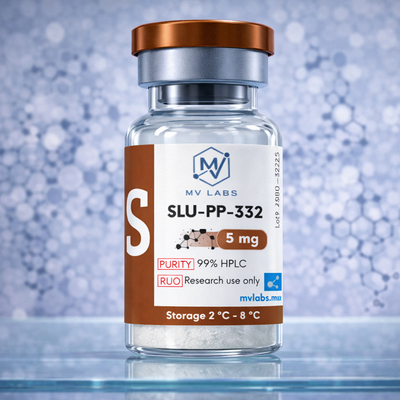
Complete your protocol
Academy
Guides & articles
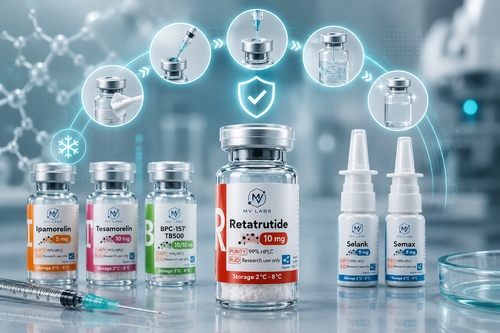
How to Reconstitute a Peptide: A Simple Step-by-Step Guide
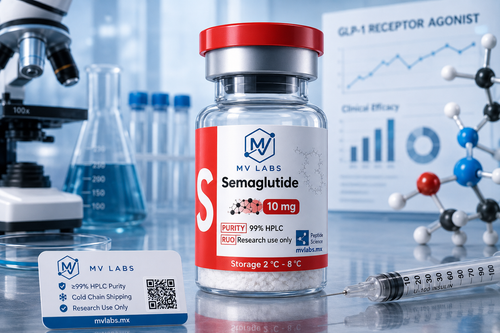
Semaglutide: Complete Research Guide
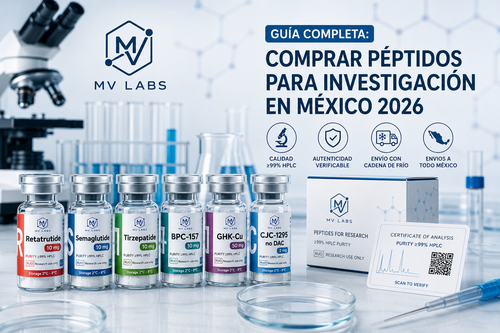
Guía Completa: Comprar Péptidos para Investigación en México 2026
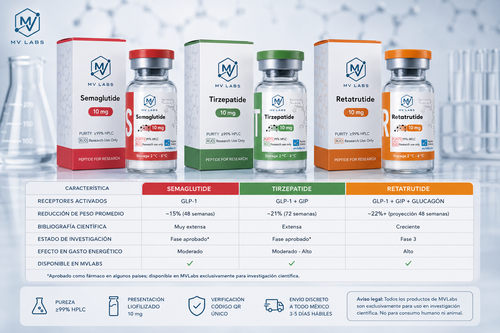
Retatrutide vs Semaglutide vs Tirzepatide: Comparativa para Investigación Metabólica
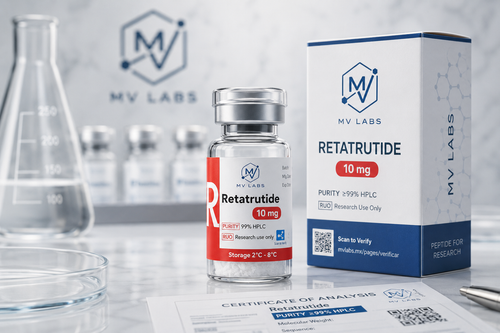
Qué es Retatrutide: Guía Completa del Péptido Triple Agonista
⚠ Solo para investigación (RUO). Compuesto liofilizado de grado investigación para uso in vitro únicamente. No aprobado para uso humano o veterinario. Venta a investigadores calificados. +18.