
98.7% HPLC

GHK-Cu
★★★★★ 4.9 · Sold out
$ 1,250.00
Verifiable COA
Express shipping
Third-party tested
Description +
Copper tripeptide (GHK-Cu) — studied for collagen and elastin synthesis, wound remodeling and antioxidant signaling.
Purity ≥98.7% HPLCFormat Lyophilized powderVial 3 mlResearch use only
Overview
GHK-Cu (glycyl-L-histidyl-L-lysine–copper) is a naturally occurring copper tripeptide with high affinity for copper(II) ions. Present in human plasma, saliva and urine, its levels decline with age. It is one of the most studied peptides in skin, connective-tissue and wound-repair research.
In research models GHK-Cu is examined for stimulating the synthesis of collagen, elastin and glycosaminoglycans, modulating a broad set of genes linked to tissue remodeling, and acting as an antioxidant and anti-inflammatory signal. It has also been studied for its influence on angiogenesis and nerve outgrowth. Supplied as research-grade material for laboratory use only.
Research applications
- Collagen, elastin and glycosaminoglycan synthesis in dermal fibroblasts
- Skin regeneration, wound-remodeling and connective-tissue research
- Antioxidant and anti-inflammatory signaling
- Copper-dependent enzyme and gene-expression modulation
- Angiogenesis and nerve-outgrowth models
- Hair-follicle and aesthetic research
Research protocol reference
Dose levels referenced by the MVLabs peptide calculator, shown for research reference only:
Starting dose1 mg
Maintenance1–2 mg
Frequency1×/day
Copper tripeptide studied topically and subcutaneously in research. Injectable references often use ~1–2 mg/day; topical formulations vary. Protocols vary by study.
Research reference only — not dosing guidance for human use. Use the calculator for other vials or volumes.
Presentations & dosing: vial size varies by product. See the reconstitution guide in the Academy and use the calculator to convert your dose into exact units.
Open the calculator →Handling & storage
Supplied as a lyophilized powder. Store at 2–8 °C on receipt; protect from heat, light and moisture, and avoid excessive agitation. If reconstitution is required for laboratory work, use sterile technique — bacteriostatic water, or 0.6% acetic acid for low-solubility peptides. Protocols vary by research application.
References
- Pickart L, Margolina A. Regenerative and Protective Actions of the GHK-Cu Peptide in the Light of the New Gene Data. Int J Mol Sci 2018. mdpi.com
- Pickart L, Vasquez-Soltero JM, Margolina A. GHK Peptide as a Natural Modulator of Multiple Cellular Pathways in Skin Regeneration. Biomed Res Int 2015. doi.org
Research use only. Research-grade, high-purity material (≥98.7% HPLC) supplied strictly for laboratory and analytical purposes. Not for human or animal consumption; not a drug or dietary supplement; not approved by the FDA, EMA or other agencies. To be handled only by qualified professionals in appropriate facilities, under all applicable laws. A certificate of analysis may be available on request.
Specifications +
| Purity (HPLC) | ≥ 98.7% |
| Form | Lyophilized |
| Storage | -20 °C, no light |
| SKU | 8213004157043 |
Reconstitution +
Reconstitute with bacteriostatic water and use our reconstitution calculator to convert your target dose into syringe units.
Certificate (COA) +
Each batch includes a verifiable certificate of analysis at /verify using the product code.
Tool
Reconstitution & dosing calculator
Convert your target dose into syringe units for this compound, on its dedicated page.
You may also need
Complete your protocol
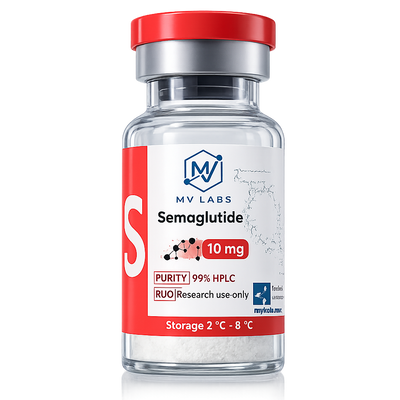
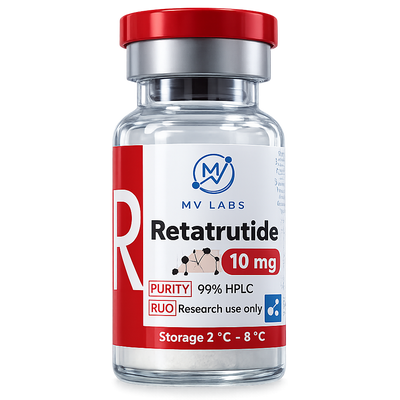
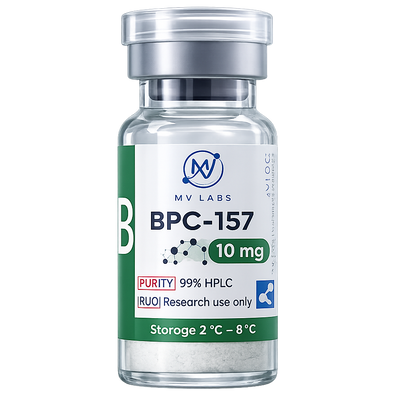
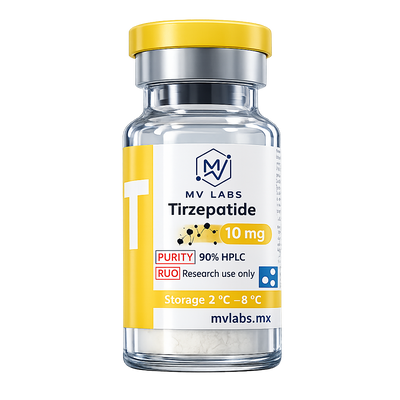
Academy
Guides & articles
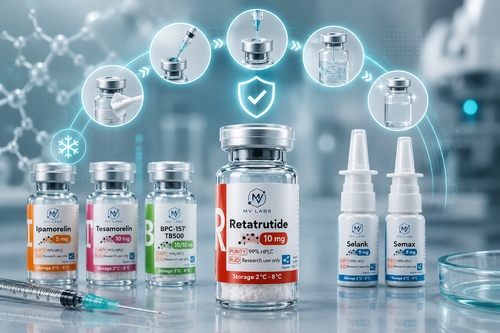
How to Reconstitute a Peptide: A Simple Step-by-Step Guide
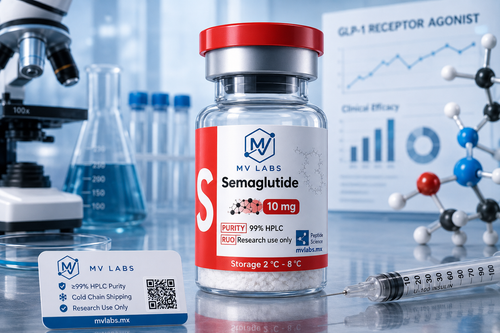
Semaglutide: Complete Research Guide
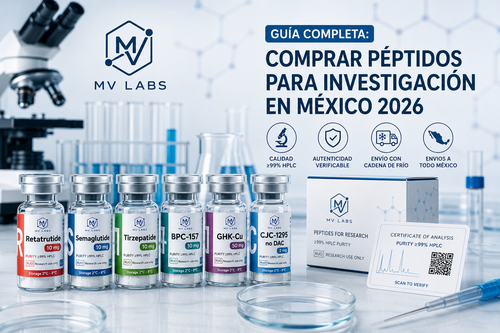
Guía Completa: Comprar Péptidos para Investigación en México 2026
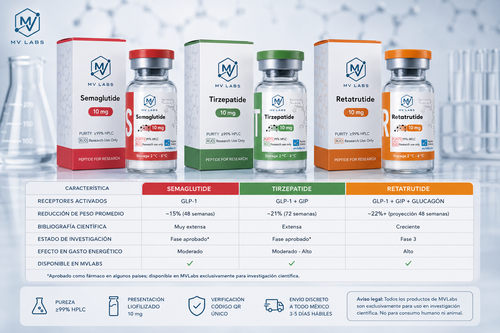
Retatrutide vs Semaglutide vs Tirzepatide: Comparativa para Investigación Metabólica
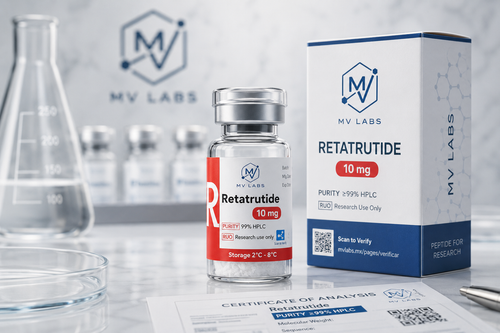
Qué es Retatrutide: Guía Completa del Péptido Triple Agonista
⚠ Solo para investigación (RUO). Compuesto liofilizado de grado investigación para uso in vitro únicamente. No aprobado para uso humano o veterinario. Venta a investigadores calificados. +18.